









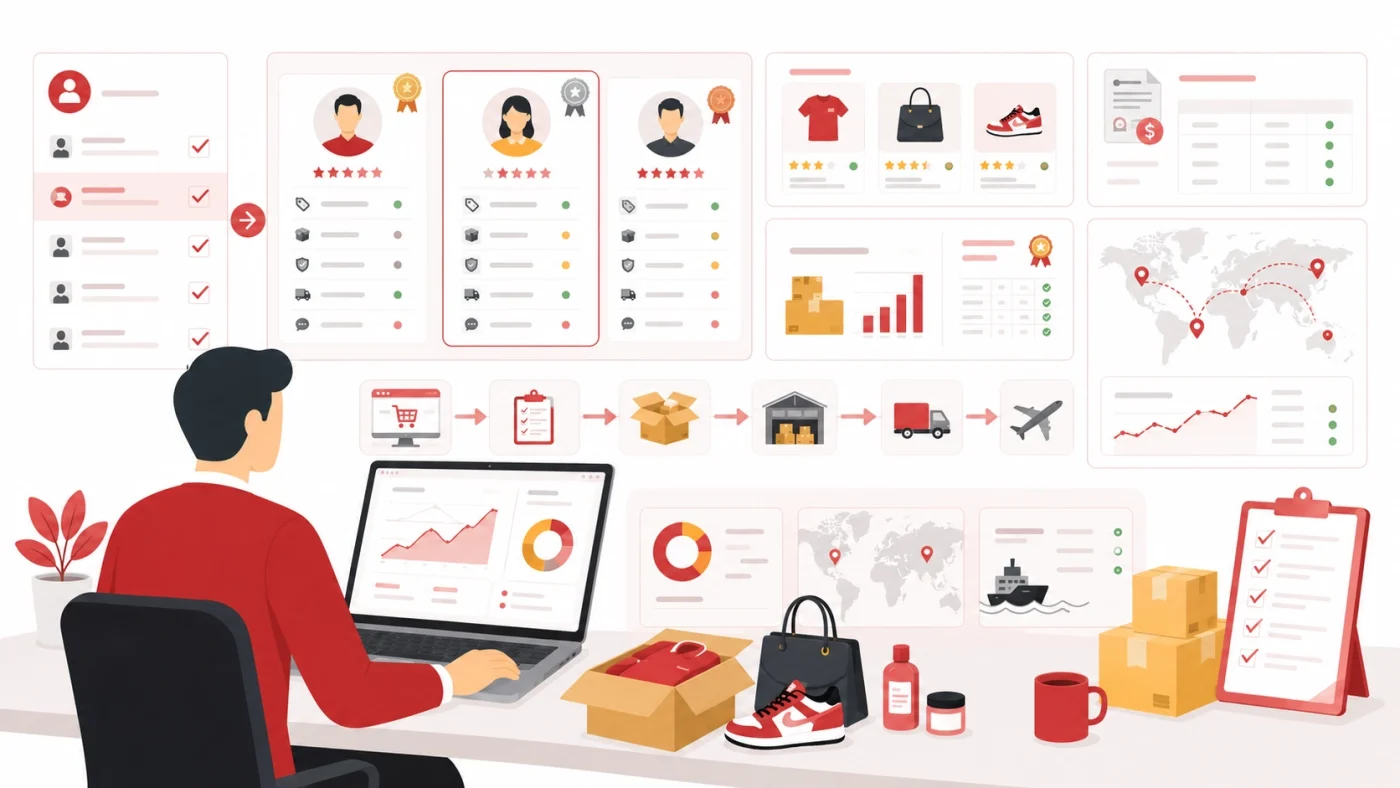
Choosing a dropshipping agent is not just a price comparison. The agent may influence sourcing, product quality, inventory, packaging, order processing, shipping, tracking, and the way problems are resolved. A weak process in any one of these areas can become a complaint under your store’s name.
This guide explains how to choose a dropshipping agent by asking 15 practical questions before transferring real orders. It also includes warning signs, a trial plan, and a weighted scorecard so you can compare candidates using evidence instead of sales promises.
Define the Work Before You Compare Agents
Many sellers begin by requesting a quotation. Start with an operating brief instead.
List the products, target countries, current and expected order volume, required processing time, quality concerns, packaging needs, store platform, and the problems you want the agent to solve. One seller may need lower-cost sourcing. Another may already have a supplier but need inspection, storage, branding, or faster shipping.
Send the same brief to every candidate. Otherwise, one agent may quote only the product and shipping while another includes inspection, repacking, storage, and service fees. The totals will not be comparable.
The goal is not to find someone who agrees to everything. It is to find an agent who understands the work, explains the limits, and can show how the process will operate after real customer orders begin.
Do Not Choose From a Profile Alone
A website, testimonial, warehouse video, or fast first reply can help a candidate enter your shortlist, but none of them proves that daily operations will remain stable. Public reviews may describe a different product, destination, order volume, or period of service. A warehouse tour can show that facilities exist without showing how accurately your orders will be processed.
Treat every claim as something to verify. “Fast shipping” should become route-level trial data. “Strict quality control” should become a written inspection standard. “Real-time inventory” should become SKU updates that match actual dispatch. “Dedicated support” should become a named contact, backup contact, and escalation process.
This evidence-based approach also makes comparison fairer. A smaller agent with clear procedures may be a better fit than a larger provider with a broad service list but limited visibility. The decision should be based on the risks that matter to your store, not the number of services shown on a sales page.
1. Which Parts of My Supply Chain Will You Manage?
“Full service” can mean different things. Ask which tasks are handled by the agent’s own team and which are passed to factories, warehouses, or shipping partners.
Clarify responsibility for supplier research, sample collection, purchasing, inspection, storage, order processing, packing, shipping, tracking, returns, and replacements. A useful answer identifies who owns each step and who investigates when something goes wrong.
Your agent should reduce coordination rather than add another layer of confusion. A suitable dropshipping agent service should provide one accountable workflow instead of several disconnected contacts.
2. How Do You Find and Compare Suppliers?
Do not ask only whether the agent can source a product. Ask what happens after you send the link.
A strong process begins with specifications: material, dimensions, functions, accessories, packaging, target cost, expected volume, and destination market. The agent should then compare more than price, including sample quality, production time, capacity, communication, replacement terms, and packaging options.
Request more than one sourcing option for an important product. A single quotation does not show whether the market was researched or whether the first available offer was simply forwarded.
Useful product sourcing support should include supplier comparison, sampling, pricing, and coordination—not just a product link and a number.
3. How Will You Prove the Product Matches My Requirement?
Two products can look identical in a photo while differing in material, weight, durability, accessories, or packaging.
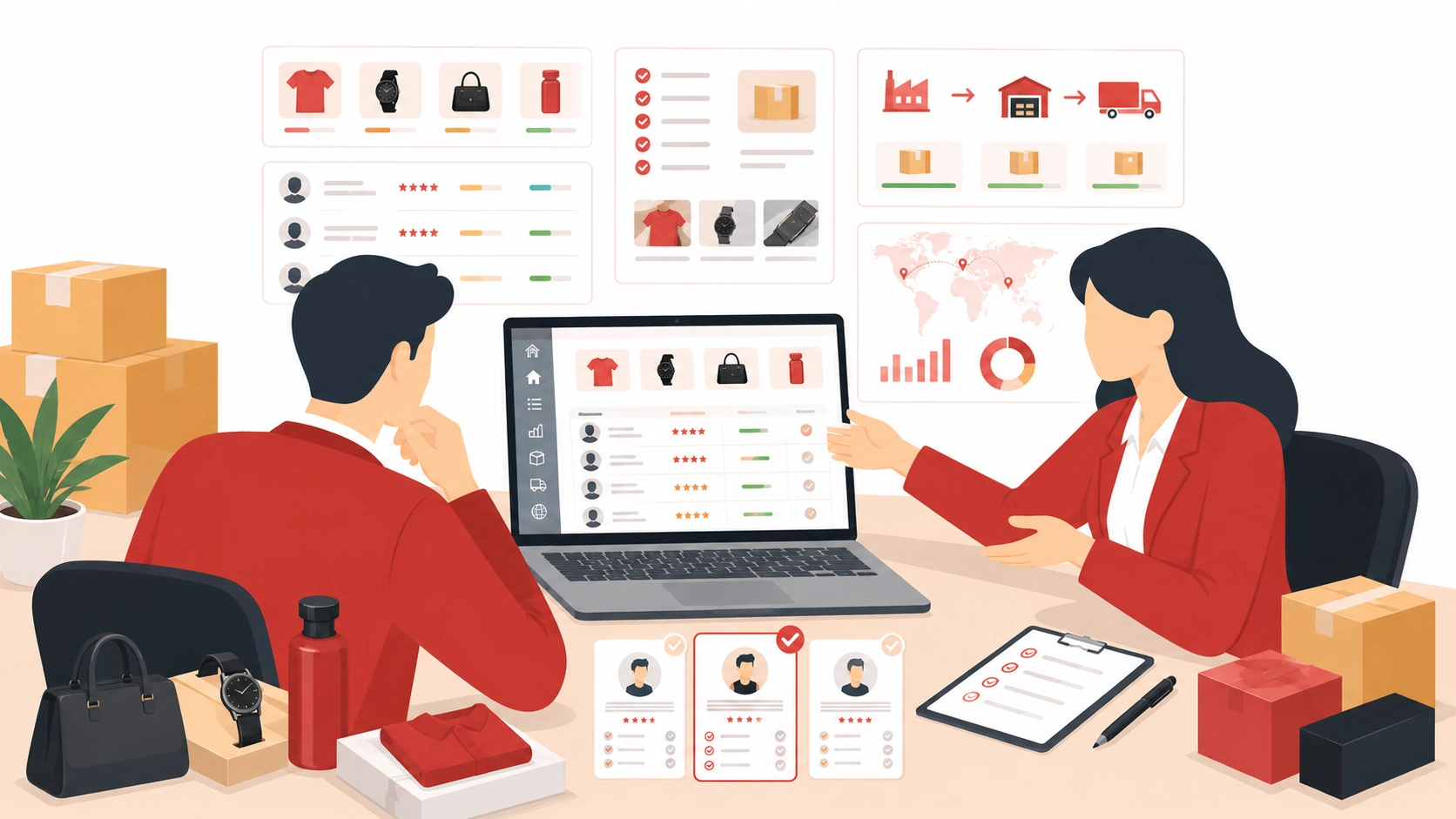
Ask what evidence you will receive before approval. This may include current photos, video, exact dimensions, material details, packaging images, a physical sample, or basic function testing.
Send a written specification and ask the agent to confirm it item by item. Avoid relying on phrases such as “same quality” or “almost identical.” For brand-sensitive products, keep an approved sample as the standard for future batches.
4. What Is Included in the Quotation?
Ask for a cost breakdown covering product price, domestic freight, service fees, inspection, storage, picking and packing, packaging materials, international shipping, payment fees, and reshipment costs.
Then ask what may change later. Product prices can move with quantity, materials, and production availability. Shipping can vary with destination, parcel weight, dimensions, and route conditions.
A reliable dropshipping agent should explain how long the quote is valid, how changes are communicated, and whether you approve a new cost before processing. Compare total delivered cost using the same product, destination, packaging, and shipping method.
5. How Do You Confirm Inventory?
Ask whether stock is physically held in the warehouse, kept at a factory, shared across sales channels, purchased after each order, or reserved for your store.
You also need visibility by SKU and variant. A supplier may have plenty of total stock while your best-selling size is almost unavailable.
Ask how often inventory is updated, when low-stock warnings are sent, and what happens when an item sells out after payment. During the trial, compare stock confirmations with actual processing. Repeated “in stock” messages followed by sourcing delays are a warning sign.
6. What Is Completed Before the First Order?
The first customer order should not be the first time the agent studies your product.
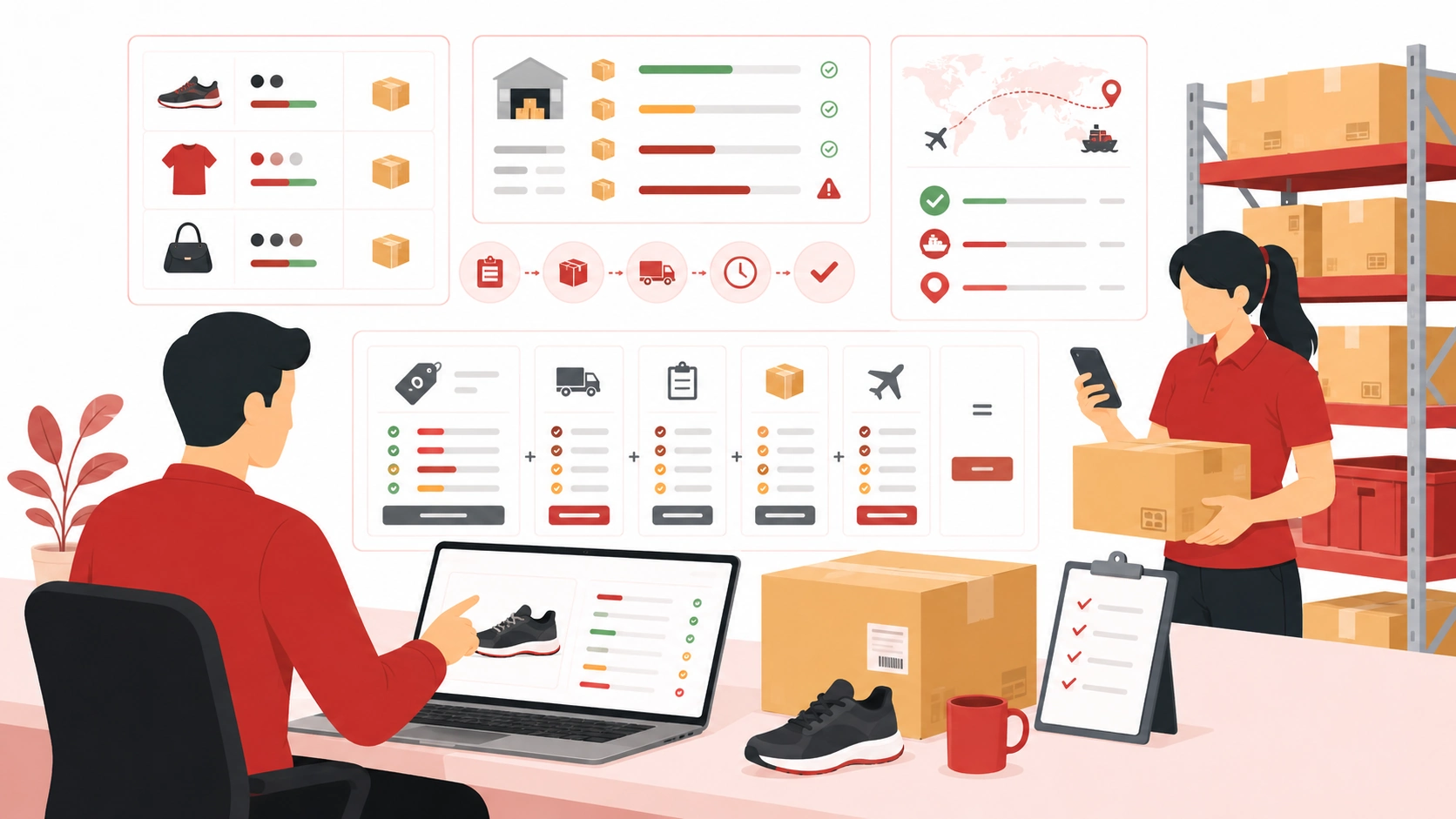
Before launch, confirm the exact SKU, approve a sample, record packaging instructions, define inspection standards, test the order connection, choose shipping methods, and agree on processing cutoffs and exception rules.
Ask to see how the product appears in the agent’s system. Check variant names, internal SKUs, weights, packaging notes, and restrictions. A small mapping error can become dozens of wrong orders once automation begins.
7. What Does Your Quality Check Include?
Almost every agent says products are checked. Ask what “checked” actually means.
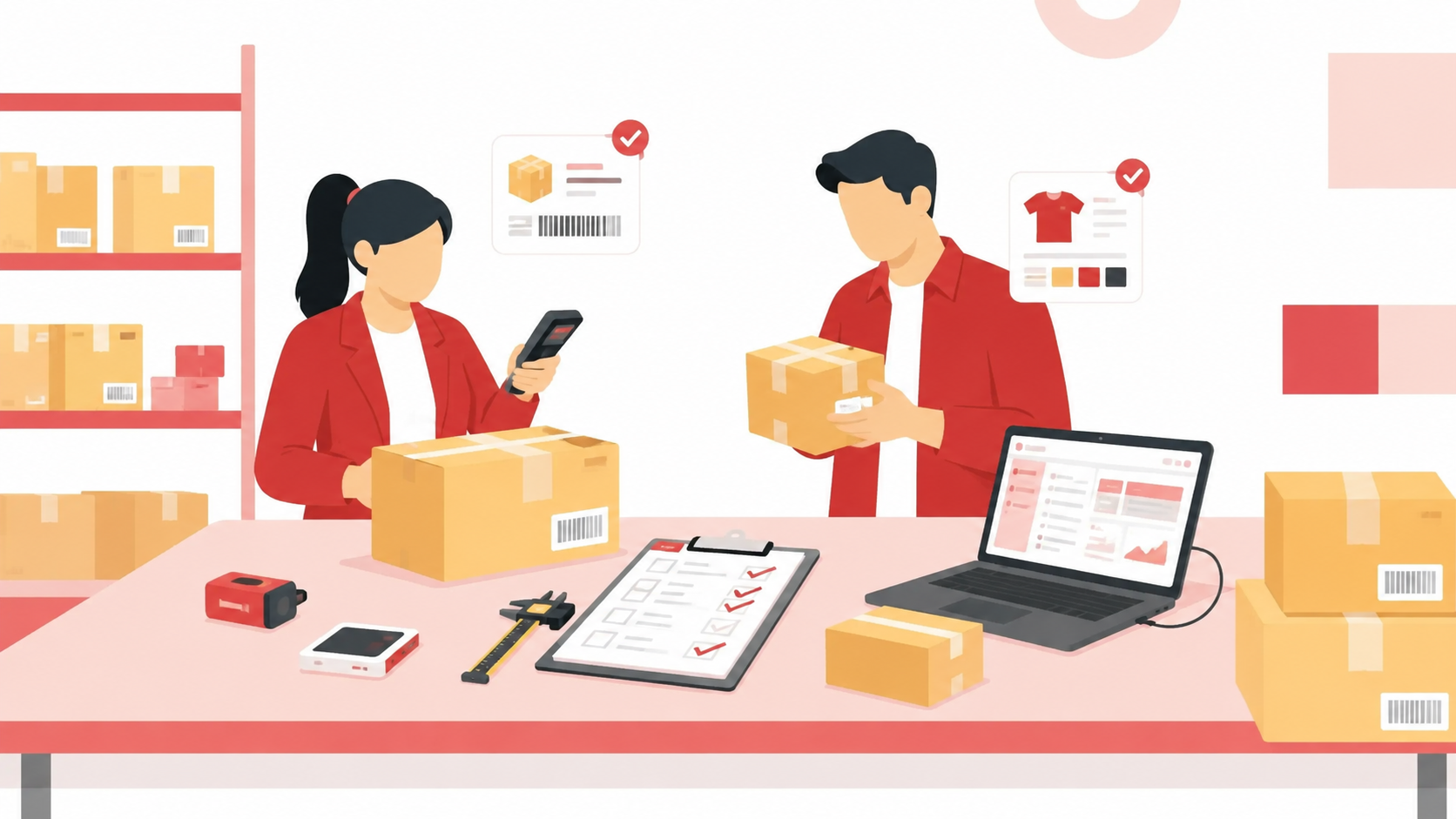
Separate a basic visual look from quantity matching, variant confirmation, packaging inspection, measurements, product-specific checks, function testing, photo evidence, and batch sampling.
Provide your own defect list. A clothing seller may care about measurements, stitching, stains, and labels. An electronics seller may need charging, accessories, plugs, and basic function checked.
A defined quality inspection service is more useful than a general promise because the standard, evidence, and response to a failed item can be agreed in advance.
8. How Will Orders Reach Your Warehouse?
A private dropshipping agent may use an app, API, ERP connection, CSV file, shared sheet, or manual submission. The method matters less than whether it is clear and testable.
Ask how orders are imported, how variants are mapped, how cancellations and address changes are handled, when tracking returns to your store, and how failed imports are reported.
Run test orders before launch. Include different variants, an address change, a cancellation, and an invalid address. You are testing whether both the system and the team notice exceptions.
9. How Do You Measure Processing Time?
“Fast processing” needs a clear starting point and endpoint.
Ask whether the clock begins when the customer pays, when the order enters the system, when your balance is funded, or when the product reaches the warehouse. Then ask whether processing ends when a label is created, the parcel is packed, or the carrier scans it.
Request performance ranges for stocked and non-stocked products. Also confirm the daily cutoff, warehouse time zone, weekend schedule, and tracking activation time.
10. Which Shipping Lines Will You Use?
Do not accept one delivery promise for every country. Shipping performance varies by destination, product type, parcel size, customs conditions, and final-mile carrier.
Ask for the processing time, transit range, tracking coverage, final-mile carrier, product restrictions, volumetric-weight rules, lost-parcel policy, and backup route for your main markets.
Place trial orders to representative destinations. Record dispatch, first tracking event, customs movement, and final delivery. A cheaper route is not better when tracking is weak or delivery is too inconsistent for your customer promise.
11. What Happens When an Order Goes Wrong?
Give the agent realistic scenarios: an unavailable variant, wrong product, damaged parcel, inactive tracking, returned shipment, missing delivery, product defect, or address change.
For each case, ask who investigates, what evidence is required, when you receive an update, who pays, and how long the decision normally takes.
A reliable dropshipping agent should have an escalation path. “We will ask the carrier” is not enough. You need to know when a shipment is considered lost, when a replacement may be released, and who can approve the solution.
During the trial, test one legitimate exception such as an address change or cancellation.

12. Who Handles Daily Communication?
The salesperson who wins your account may not manage your orders.
Ask who handles quotations, stock, daily fulfillment, shipping problems, quality issues, billing, and urgent escalation. Confirm the main contact, backup contact, working hours, holiday coverage, and who can authorize refunds or reshipments.
Good communication is not only fast. It is accurate, specific, and proactive. Ask the candidate to summarize your requirements back to you. Important prices, standards, and policies should remain in a reviewable written record.
13. Can You Support Branding Reliably?
Branding involves more than printing a logo.
Ask about neutral packaging, stickers, inserts, mailers, labels, custom boxes, and bundles. Then examine the operating details: where materials are stored, how stock is counted, how low inventory is reported, and how the warehouse matches packaging to the correct SKU.
Confirm minimum quantities, lead times, setup fees, storage charges, and ownership of leftover materials. A branding option is valuable only when it can be repeated correctly across ordinary daily orders.
14. What Changes When Volume Increases?
An agent that performs well at five orders a day may struggle during a promotion or viral campaign.
Ask about warehouse capacity, supplier capacity, reserved stock, replenishment triggers, extra staffing, packaging supply, processing priority, and backup shipping routes.
Use a realistic scenario: “This SKU usually sells 10 units per day but may reach 80 for several days. What information do you need, and what changes operationally?”
The best dropshipping agent is not automatically the largest. It is the one whose controls and capacity match the way your store grows.
15. What Happens If I Leave?
Discuss exit terms before sending inventory or customer data.
Clarify ownership of remaining products, custom packaging, samples, inspection records, store data, tracking history, balances, refunds, and open claims. Ask whether inventory can be transferred to another warehouse and what the cost will be.
A professional agent should not depend on unclear stock ownership or inaccessible information to keep your business. A reasonable exit process is a positive sign.
Use a Dropshipping Agent Checklist and Scorecard
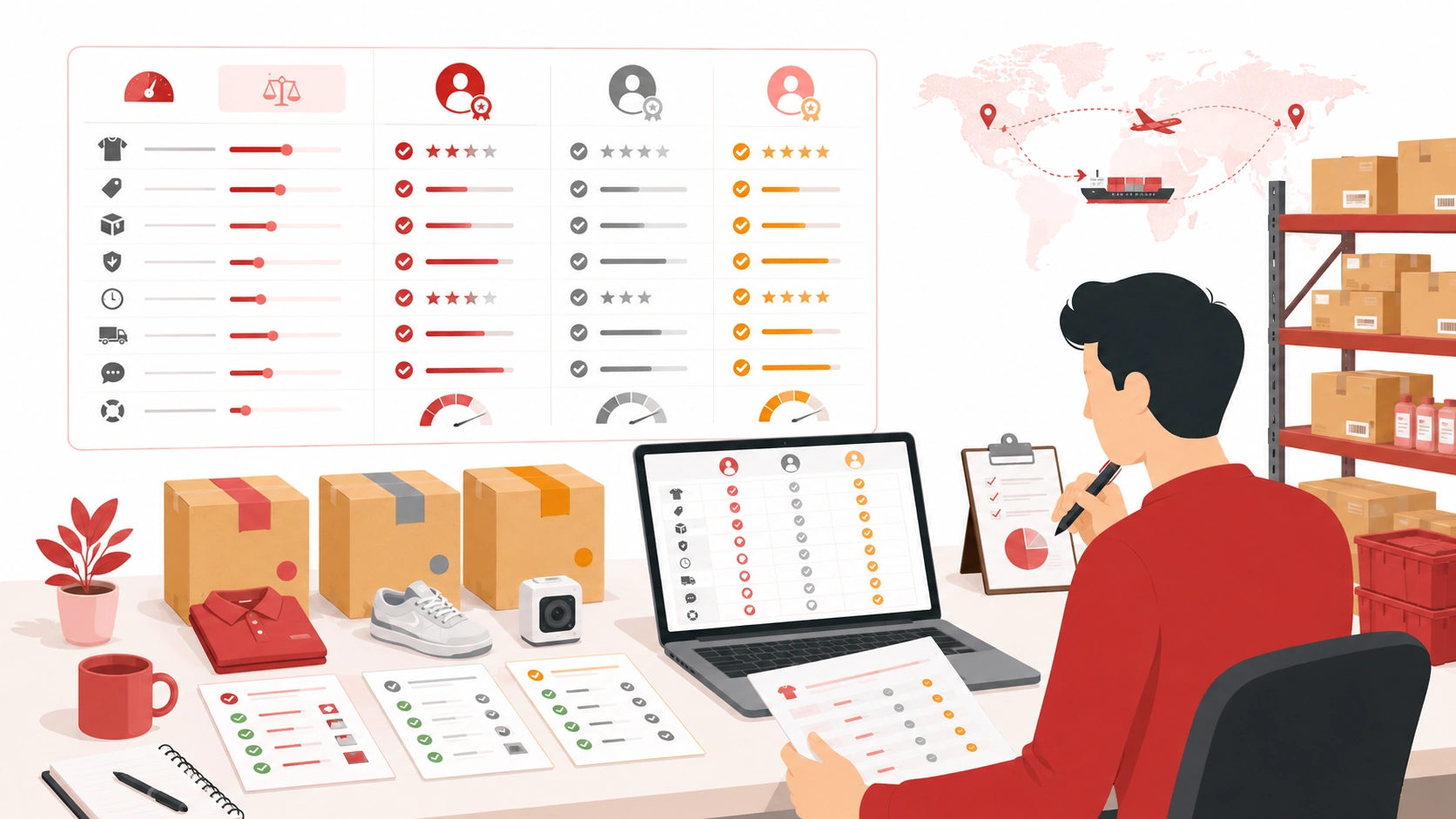
After the interviews, score every candidate using the same evidence.
| Evaluation Area | Weight | Evidence |
| Accountability | 10% | Workflow, responsible teams, escalation |
| Sourcing | 10% | Supplier comparison, samples, specifications |
| Pricing | 10% | Complete cost breakdown and change policy |
| Inventory | 10% | SKU visibility, alerts, replenishment |
| Quality control | 15% | Inspection scope, evidence, failure response |
| Integration | 10% | Test orders, mapping, exception visibility |
| Processing and shipping | 15% | Dispatch data, tracking, route tests |
| Problem resolution | 10% | Policies and test-exception response |
| Communication | 5% | Accuracy, ownership, backup contact |
| Scaling and exit | 5% | Capacity plan and transfer terms |
Add minimum pass conditions. A candidate should not pass if it refuses a sample, hides major fees, cannot explain inventory ownership, or has no process for wrong items and lost parcels.
A dropshipping agent checklist does not replace judgment. It makes the judgment traceable.
Red Flags That Should Slow the Decision
Pause when an agent gives a price before confirming the product, refuses current evidence or samples, promises identical delivery times everywhere, cannot define its quality check, hides fees, changes payment details without explanation, repeatedly delays “in stock” products, or pressures you to transfer all orders immediately.
An honest limitation is often safer than an effortless yes.
Run a Controlled Trial
Test one or two products before moving your full volume. Use multiple variants and representative destinations.
Track quote accuracy, sample match, stock confirmation, processing, tracking activation, delivery, packaging, product condition, communication, exceptions, and unexpected charges.
Begin with test orders, then a small batch of real orders. Increase volume only after performance remains stable. A proposal shows what the agent says the process will be; trial data shows what it actually is.
Conclusion
Learning how to choose a dropshipping agent means looking beyond the quote and examining the system behind every order.
Ask who owns each task, how products and stock are verified, what inspection includes, how orders move through the warehouse, and what happens when the normal process fails. Put the answers in writing and test them before scaling.
Your customers will never meet your agent, but they will experience the agent’s decisions through the product, packaging, tracking, delivery, and response to problems. Choose the operation you can verify—not the promise that sounds easiest.
Choosing a dropshipping agent starts with understanding your products, order volume, quality requirements, and target markets. If you are comparing potential partners, share these details with the Upedge team. We can discuss suitable sourcing and fulfillment arrangements, clarify the services you need, and provide a quotation based on your requirements.
FAQs
A dropshipping agent coordinates work between your store, suppliers, warehouse, and shipping providers. Depending on the arrangement, the agent may source products, negotiate prices, purchase stock, inspect goods, fulfill orders, arrange packaging, upload tracking, and help resolve product or delivery problems.
Prepare a clear operating brief and interview several candidates with the same questions. Request samples, product evidence, a complete quotation, inspection standards, shipping options, and exception rules. Then verify the answers with controlled orders.
A private dropshipping agent may offer closer communication, flexible sourcing, and customized support. A platform may provide easier integration, a ready catalog, and standardized processes. Choose according to product complexity, order volume, branding needs, internal resources, and how much manual coordination you can manage.
An agent may earn through product margin, service fees, fulfillment charges, shipping margin, subscriptions, or a combination. Ask for product, domestic freight, inspection, storage, packaging, fulfillment, international shipping, and after-sales costs. Compare the total delivered cost.
No. Start with samples, system tests, and a limited batch. Confirm that SKU mapping, inspection, processing, tracking, and problem resolution work as agreed. Increase order volume in stages.
It should cover responsibility, sourcing, product verification, pricing, inventory, onboarding, quality control, integration, processing, shipping, exceptions, communication, branding, scaling, and exit terms. It should also record trial-order results and minimum pass conditions.
Give every candidate the same product, specification, destination, packaging, and shipping requirement. Score the evidence across sourcing, pricing, inventory, quality, fulfillment, communication, and problem resolution. The best dropshipping agent is the one that fits your operation and performs consistently during testing.
A private dropshipping agent may offer closer communication, flexible sourcing, and customized support. A platform may provide easier integration, a ready catalog, and standardized processes. Choose according to product complexity, order volume, branding needs, internal resources, and how much manual coordination you can manage.
